

Introduction
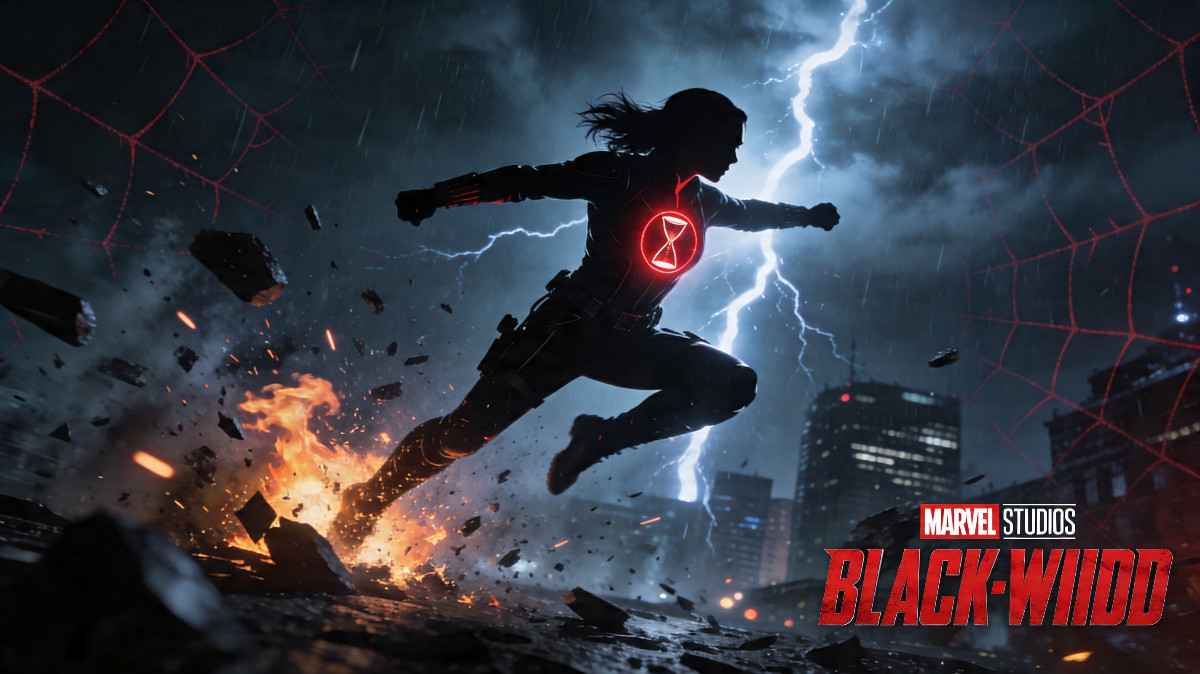
Black Widow finally gives Natasha Romanoff the standalone story fans had been waiting for. Unlike most Marvel movies, this one is less about saving the world and more about confronting the past.
The film takes place between Captain America: Civil War and Avengers: Infinity War, during a time when Natasha is a fugitive. This timeline is important because it shows her emotional journey before the events that lead to her ultimate sacrifice later in the Marvel universe.
Natasha’s Childhood and the Truth About the Red Room
The story begins years earlier, showing how the Red Room operates. This secret Russian program takes young girls and trains them to become elite assassins known as Black Widows. These girls are not just trained physically—they are psychologically broken down and rebuilt into weapons.
Natasha Romanoff is one of these girls. As part of an undercover mission, she is placed in the United States with a fake family consisting of Alexei (Red Guardian), Melina, and a younger girl named Yelena.
They live in Ohio, pretending to be a normal American family. However, their real mission is to steal classified research from a secret organization. During this time, something unexpected happens—they begin to care about each other. For Yelena especially, this was not a mission but a real childhood. Black Widow.
When the mission ends, everything changes quickly. The “family” is torn apart, and Natasha and Yelena are taken back to the Red Room, where their real training begins again. This moment is important because it shows how their emotional connection was real, even if the situation wasn’t.
Natasha’s Life as an Assassin and Her Biggest Mistake
As Natasha grows older, she becomes one of the most skilled agents in the Red Room. She completes dangerous missions and builds a reputation as a deadly assassin.
Her life takes a major turn when Hawkeye is sent to eliminate her. Instead of killing her, he sees that she is more than just a weapon and offers her a chance to change her life.
This moment is what leads Natasha to join S.H.I.E.L.D. and eventually become an Avenger.
However, to prove her loyalty, Natasha makes a difficult decision. She targets Dreykov, the leader of the Red Room, by bombing his office. She believes she killed him along with his daughter, Antonia.
This becomes one of the darkest moments of her past. The guilt of possibly killing an innocent child stays with her and shapes her character moving forward.
Life After Civil War and the Return of the Past
After the events of Captain America: Civil War, Natasha is forced into hiding. The Avengers are divided, and she is now a wanted fugitive.
While living in isolation in Norway, she receives a mysterious package. Inside is a red gas antidote capable of breaking the mind control used on Black Widows.
This leads her back into a world she tried to forget.
She soon reunites with Yelena, who reveals a shocking truth—Dreykov is still alive, and the Red Room is still operating. Not only that, but the system has become even more dangerous. Black Widow
Instead of relying only on training, Dreykov now uses chemical mind control. This means every Widow is completely controlled, with no free will at all.
Taskmaster: The Silent Threat
One of the most unique villains in the movie is Taskmaster. Unlike typical villains, Taskmaster doesn’t talk much but is extremely dangerous.
Taskmaster has the ability to copy any fighting style perfectly just by observing it. Throughout the movie, Taskmaster mimics moves from multiple Avengers, making every fight unpredictable.
But the biggest twist comes later—Taskmaster is revealed to be Antonia, Dreykov’s daughter. She survived Natasha’s earlier attack but was severely injured. Dreykov turned her into a weapon by implanting technology and controlling her mind.
This reveal hits hard because Natasha realizes her past actions directly led to this outcome.
The Meaning of Family
One of the strongest themes in the movie is family.
Natasha and Yelena reunite with Alexei and Melina to take down the Red Room. Even though their family was originally fake, their emotional bond is very real.
There are moments of humor, tension, and emotional conversations that show how much they mean to each other. Yelena, in particular, struggles with the idea that her childhood was a lie, while Natasha tries to accept her past.
This “fake family” becomes the emotional core of the story.
Final Battle and the Fall of the Red Room
The Red Room is revealed to be a massive hidden base floating in the sky. This twist makes the final act more intense and visually dramatic.
Natasha confronts Dreykov but faces a major challenge—she physically cannot harm him due to a biological control mechanism built into every Widow.
Instead of relying on strength, Natasha uses intelligence. She manipulates the situation, breaks free from the control, and finally fights back. Black Widow
At the same time:
- Yelena uses the antidote to free other Widows
- Melina sabotages the base from inside
- Alexei creates chaos to distract enemies
As everything starts falling apart, the Red Room begins to crash from the sky.
Natasha also manages to free Taskmaster using the antidote, giving Antonia her freedom back.
Dreykov is killed, and his entire operation is destroyed.
Ending Explained and Future Setup
After the destruction of the Red Room, Natasha collects important data about Dreykov’s global network. This data can help locate and free other Widows still under control.
She gives the antidote to Yelena, trusting her to continue the mission.
Natasha then prepares to return and help the Avengers again, which directly connects her story to future events in the Marvel timeline.
Post-Credit Scene and Its Importance
The post-credit scene takes place after Avengers: Endgame.
Yelena is shown visiting Natasha’s grave, finally getting closure. However, this moment is interrupted by Valentina, who manipulates her into believing that Hawkeye is responsible for Natasha’s death.
This scene sets up future conflicts and hints at new storylines in the Marvel universe.
Final Thoughts
Black Widow is not just an action movie—it’s a story about control, freedom, guilt, and redemption.
It gives depth to Natasha Romanoff’s character and shows that even heroes have painful pasts. More importantly, it highlights that family is not always about blood—it’s about connection.
If you enjoy simple and detailed movie explanations like this, you can explore more breakdowns on moviexplain.com, especially for Marvel and complex story-driven films.

Pingback: Spider-Man: Brand New Day Trailer Breakdown – 7 Key Hidden Details
Pingback: Bugonia (2026) Movie Explained: Dark Sci-Fi Twist Ending & Hidden Meaning
Pingback: The Patience Stone Explained (2012) – Full Story & Ending Breakdown